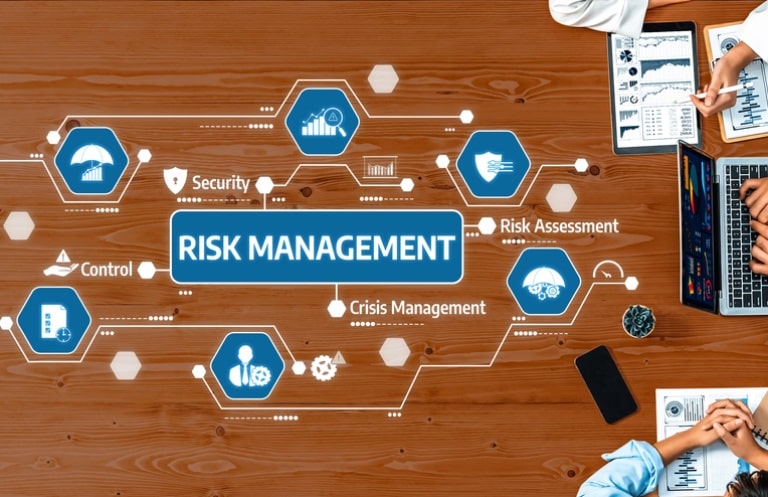
In an age where uncertainty is the only certainty, businesses must adopt innovative strategies to manage risk effectively. AI has emerged as a transformative tool in tackling the complexities of modern risk management.
By integrating AI into their risk management frameworks, companies can gain a more nuanced understanding of potential threats and make informed decisions to shield their operations. Keep reading to discover how AI is revolutionizing the way organizations handle risk, compliance, and fraud detection.
Enhancing Decision Making With Predictive Analytics in Risk Assessment
Predictive analytics, a key component of AI in risk management, has the ability to transform decision-making processes. By analyzing historical and current data, AI models can predict future outcomes, allowing managers to make more informed decisions about where to allocate resources to mitigate risks.
Moreover, AI-driven analytics can help in establishing risk thresholds. These automated systems can alert decision-makers when certain risk indicators approach critical levels, prompting timely intervention. This results in a more strategic approach to risk management, rather than a series of ad hoc responses.
The intricacies of market dynamics and customer behavior also become more manageable through predictive analytics. AI’s ability to simulate various scenarios helps organizations prepare for a range of potential market changes, ensuring they are not caught off guard by sudden shifts.
Streamlining Compliance and Fraud Detection with AI Algorithms
Compliance with regulatory standards is a primary concern for many industries, and AI offers a powerful solution to streamline this process. By automating compliance checks and documentation, AI algorithms reduce the administrative burden and minimize the risk of human error.
Additionally, AI’s role in fraud detection is becoming increasingly critical. Complex machine learning algorithms are capable of analyzing transaction patterns and identifying anomalies that might indicate fraudulent activity. This proactive stance against fraud not only protects the bottom line but also maintains customer and investor trust.
In the context of global operations, AI also simplifies the compliance landscape by keeping track of varying regulations across different jurisdictions. This ensures that multinational corporations adhere to the appropriate standards, avoiding costly penalties and reputation damage.
AI-Powered Risk Management and Its Growing Importance
The convergence of risk management and AI signifies a major shift in how organizations approach uncertainty. AI facilitates the analysis of vast amounts of data, recognizing subtle patterns that humans may overlook. This enhanced capability helps in pinpointing vulnerabilities and forecasting the likelihood of future risks.
Incorporating AI helps bridge the gap between reactive and proactive risk management. Instead of merely responding to incidents, companies can anticipate and mitigate potential risks before they materialize. This forward-looking approach is crucial in an environment where new threats can emerge with little warning.
AI powered risk management by TrustLayer exemplifies the trend of leveraging cutting-edge technology to safeguard business interests. By integrating such intelligent solutions, organizations can handle risks more efficiently and with greater confidence.
Case Studies: Successful Implementations of AI in Risk Management Strategies
Real-world case studies illustrate the transformative impact of AI on risk management. Financial institutions, for instance, have employed AI to detect and prevent credit card fraud, saving millions in potential losses. These systems quickly learn from transaction patterns, enabling them to recognize fraudulent activities with high accuracy.
In the healthcare sector, AI has been instrumental in managing patient data and predicting health risks. By intelligently analyzing medical records, AI tools can alert healthcare providers to potential issues before they become critical, significantly improving patient outcomes.
Altogether, AI-powered risk management is not merely a trend but an essential advancement that is redefining the security and resilience of businesses across all sectors. Its ability to predict, adapt, and learn from data makes it a pivotal asset for any organization looking to navigate the complexities of the modern risk landscape with confidence and finesse.